New Mexico Plate Replacement: Lost or Damaged
New Mexico license plate replacement covers three situations that look different and end in the same place. A plate that has bent, cracked or lost its reflective finish must be replaced rather than renewed. A plate that has gone missing needs a replacement order before the vehicle returns to the road. A plate taken from a vehicle needs a report to law enforcement alongside the replacement. This page covers each case, the charge that applies, the steps to order and what happens to the registration behind the plate.
New Mexico license plate replacement depends on the design you hold. A lost or damaged chile plate carries a published replacement charge of $17 in person or $7.25 online, which sits lower than the amount for some other transactions. A standard replacement follows the same counter route. A personalized or specialty plate carries its own rule, and the characters usually return with the new plate rather than being lost, so a driver who paid for text keeps it through the swap.
- $17Chile plate replacement, in person
- $7.25Chile replacement online
- ReplaceRule for a damaged plate
- ReportStep for a stolen plate
- Rear onlySingle plate since 1961
When a Plate Needs Replacing
Four conditions send a driver to the counter, and each one carries its own paperwork. The condition of the plate decides whether a renewal will do, since a plate that fails the readability test cannot stay on the vehicle. A driver who checks the surface in daylight catches most problems before a stop raises them.
A plate that has bent, cracked or faded
A plate that has bent, cracked or lost its reflective finish fails the readability test and cannot be renewed in place. The registration fee follows the weight of the vehicle. A crease that folds a character away hides part of the serial from a camera, and a faded surface defeats the sheeting that keeps the plate legible at night. Order a replacement, fit the new plate and then renew the registration against it. A driver who keeps a damaged plate on the vehicle invites a citation over a problem that costs little to fix.
A plate that has gone missing
A missing plate leaves the vehicle without the display the state requires, so it comes off the road until a replacement arrives. A sale brings a plate and title transfer with it. Order the replacement through the division, then keep the paperwork in the vehicle in case a stop raises a question. A plate that fell off through a loose bolt usually turns up, and a driver who finds the original afterwards can return it rather than running two plates on one vehicle. Check the mounting when a plate goes missing without a reason, since a cracked bracket causes the next loss too.
A plate taken from a vehicle
A stolen plate calls for two actions rather than one. Report the theft to law enforcement so the record shows the plate left your control, then order a replacement. The report protects you from answering for a plate used in a crime or a toll violation after the theft. Keep the report number with the replacement paperwork, since it answers a question that may arrive weeks later. A driver who skips the report carries the risk that a camera reading the plate returns to a vehicle no longer under their control.
A plate with a worn design
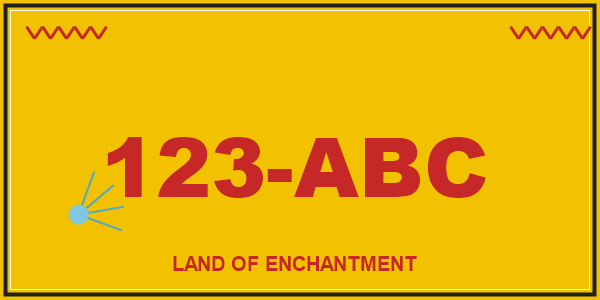
A plate can lose the print that carries the artwork even as the characters themselves stay intact. A yucca that has faded off the yellow design, or a chile pepper that has worn through on the black plate, leaves a plate that reads technically but looks nothing like the design it should be. The state treats a worn surface the same way as a fade in the reflective sheeting, since both reduce what a reader can see at a distance. Replace the plate rather than living with a worn face, and keep the old one for the file.
How to Order a Replacement
The order follows a short path, and the paperwork differs only for a stolen plate. The steps below cover a standard replacement from report to a plate on the bumper.
Decide whether the plate can be renewed
A plate that still reads clearly and holds its reflective finish can carry on through renewal. Most tasks finish at one of the MVD office locations. A plate that has bent, cracked or faded cannot, and a renewal will not save it. Look at the surface in daylight and check whether every character reads without a shadow across it. A plate that passes the test saves the cost of a replacement.
Report a theft to law enforcement
A stolen plate needs a report before the replacement order, so the record shows the plate left your control. Note the report number and keep it with the replacement paperwork. The report protects you from a citation or a toll charge attached to a plate someone else is using. File the report where the theft happened rather than where you notice it.
Order the replacement through the division
The division takes a replacement order at a field office and through its online services for some designs. Bring the registration card and identification, and note the plate number on the order. The chile design carries a published amount of $17 in person or $7.25 online, which makes it the cheapest replacement in the catalogue. Ask what the current figure is for the design you hold.
Hand in the old plate where the state asks
A damaged plate goes back to the division rather than into a drawer, which closes the record against it. The amounts appear in the registration fee table. A driver who keeps the old plate should confirm whether the state expects it returned, since an unreturned plate can sit on the record. Ask at the counter and keep the receipt for the handover. A receipt for the handover closes the loop.
Fit the new plate and renew against it
The replacement arrives with a registration record attached to it, and the validation sticker follows at the usual renewal date. Fit the plate on the rear, since New Mexico issues a single plate, and check the plate lamp works after dark. Keep the receipt with the title, since a future buyer or a lender may ask for it. Check the mounting bolts as the old plate comes off.
Official plate pages
Replacement rules sit with the plate pages, and the forms sit with the state’s popular list: mvd.newmexico.gov/vehicles/license-plates/ and mvd.newmexico.gov/forms/most-popular-forms/
What a Replacement Costs
The charge depends on the design you hold rather than on the reason for the replacement. The table below sets out the amounts the state publishes, along with the details that decide which one applies. A driver should confirm the current figure before paying, since the legislature adjusts fee schedules from time to time.
The chile design
The chile plate is the only design with a published replacement figure on the state’s own page, and it runs at $17 in person or $7.25 online. The online route costs less than half of the counter route, which makes it worth using where the state offers it. The design arrived in July 2017, so the figure reflects a plate still well inside its production run. A driver who holds a chile plate should compare the two routes before ordering.
Standard and specialty designs
A standard design that has bent, cracked or faded carries a replacement charge of its own, and the amount sits closer to the counter figure than the online one. A specialty design follows the same route, and the artwork comes back on the replacement. A mobility plate carries no fee of its own, so the ordinary replacement route applies without a design charge on top. Ask at the counter rather than working from a figure printed elsewhere.
What the charge covers
The amount covers the cost of making and issuing the new plate rather than the registration behind it. The registration stays on its yearly cycle, and the validation sticker follows at the usual date. That separation matters, since a driver should not expect a fresh twelve months of registration from a replacement. The charge is a plate cost rather than a renewal cost.
| Replacement | Amount | Where to order |
|---|---|---|
| Chile plate, in person | $17 | A division field office |
| Chile plate, online | $7.25 | Online services |
| Standard design, damaged | Replacement charge applies | A division field office |
| Personalized or specialty design | Replacement charge applies | A division field office |
What Happens to the Registration
The registration stays in place through a replacement, since the vehicle and the owner do not change. Two details follow from that, and both matter to a driver who plans the year ahead.
The plate number may change
A replacement plate may carry a new serial, and the division updates the record at the same time. A driver who quotes the old number on an insurance form should correct it once the new plate arrives. The vehicle record stays the same, so the change is a detail rather than a fresh registration. A plate that comes back with the identical number leaves nothing to update.
The validation sticker follows the usual date
The validation sticker arrives at the ordinary renewal date rather than at the replacement, so the yearly cycle carries on without a gap. A driver who replaces a plate in March still renews in the month already on the record. Keep the registration card with the vehicle once the new plate is fitted, and set the usual reminder for the month before the expiry. The two events are separate, which keeps the renewal schedule simple.
Personalized and Specialty Plates
A personalized plate follows the same replacement route with one extra question attached. The characters belong to your request, so a replacement usually returns them on the new plate. A specialty design carries its own artwork rather than text, and the same design comes back on the replacement. Where the state cannot reissue the exact design, it offers the closest option and confirms the change before issuing anything. A driver who holds a prestige plate should ask at the counter whether the text carries across, since a long gap between the loss and the order can put the characters back into circulation. Ask before you leave the counter rather than after the plate arrives.
Replacing a Plate in Another State
A driver who moves away from New Mexico cannot keep a New Mexico plate on the vehicle, since the registration ends when the vehicle registers elsewhere. The old plate comes off and goes back to the division if the driver still holds it, and the new state issues its own plate. A driver who loses a New Mexico plate after moving should not order a replacement, since the vehicle is no longer registered here. Return whatever remains and let the record close rather than keeping an inactive plate on the road.
Keeping Records of a Replacement
A replacement produces two or three documents, and they belong in different places. Keeping the set together saves a question later, and a driver who files them the same day rarely has to look for them again. The set tells a story about the vehicle, which matters when the time comes to sell it.
What to keep in the vehicle
Keep the registration card and the replacement receipt in the vehicle, since a stop may ask for proof that the plate matches a live record. A driver who has just swapped a plate should carry both documents for the first month rather than leaving them at home. The report number for a stolen plate belongs in the same folder, since a question about the old plate may arrive before the new one settles into the record.
What to keep with the title
Keep the replacement receipt with the title, alongside the bill of sale from any purchase and the registration receipt from the last renewal. That set answers most questions a lender, a buyer or an insurer can raise about the vehicle. A driver who sells the vehicle later can hand the buyer a complete file rather than a partial one, which speeds the transfer and removes an argument about the plate history.
Why the old plate matters to the record
A plate that has been handed in closes against the record, and the receipt proves the date. A plate that sits in a drawer without being returned stays open, which is why the handover matters as much as the order. A driver who wants to keep an old plate as a souvenir should ask the counter whether the state allows it rather than assuming it does. The answer depends on the design and the programme behind it, and a two-minute question settles the matter before the plate goes into a drawer.
Frequently Asked Questions
These are the questions drivers ask most often about replacing a New Mexico plate. Each answer stays short and points to the official source where the state publishes the current rule or fee. Where a detail affects money or a deadline, confirm it with MVD before you rely on it.
How much does it cost to replace a New Mexico license plate?
A lost or damaged chile plate runs at $17 in person or $7.25 online. A standard plate that has bent, cracked or faded carries a replacement charge of its own. Order through a field office, or online where the design allows it.
Can I renew a plate that is damaged?
No. A plate that has bent, cracked or lost its reflective finish fails the readability test and cannot be renewed in place. A crease that folds a character away hides part of the serial from a camera, so the state requires a replacement instead.
What should I do if my plate is stolen?
Report the theft to law enforcement and order a replacement. The report shows the plate left your control, which protects you from a citation or a toll charge attached to a plate someone else is using. Keep the report number with the replacement paperwork.
Do I keep my personalized characters on a replacement?
Usually yes. The text belongs to your request rather than to the metal, so a replacement returns the characters on a new plate. Ask at the counter, since a long gap between the loss and the order can put the characters back into circulation.
Does a replacement change my registration date?
No. The registration stays on its yearly cycle, and the validation sticker follows at the ordinary renewal date rather than at the replacement. The vehicle and the owner do not change, so the record carries on without a gap.