Buying New Mexico License Plates: Collector Notes
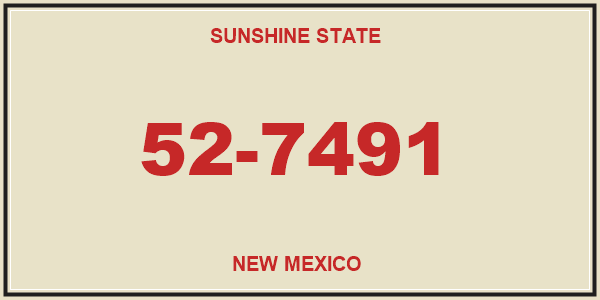
New Mexico license plate collecting rests on a few practical ideas rather than on guesswork. Age, condition and rarity decide what a plate is, and the state’s own history supplies plenty of each. A 1932 plate with the words SUNSHINE STATE, a county-coded serial from the 1950s and a chile design from 2017 all sit in the same market. This page covers what makes a plate collectable, where plates change hands, how to judge one before you buy and how to display it once it arrives.
New Mexico license plates come in a form that never touches a vehicle. The state sells sample and “Fun” plates for $9.99 each, and every one carries the words NOT FOR REGISTRATION. Collectors use them for display and for gifts rather than as road equipment. A novelty plate from a souvenir shop works the same way, since neither design matches a registration record.
- 1912First New Mexico plates
- ALPCAThe collectors’ association
- 30 yearsAge for year-of-manufacture use
- $9.99State sample plates
- Not for registrationMarking on every sample
What Makes a New Mexico Plate Collectable
Three qualities drive interest in a plate, and each one is easy to judge with the plate in your hand. The full range sits on the New Mexico license plates hub. A plate that scores well on all three holds its place in a collection for years.
Age
An older plate carries more history than a recent one, and the state’s early issues are the hardest to find. The design reference shows every design in one place. New Mexico began issuing plates in 1912 and replaced them each year, which means a pre-war plate survived only when someone kept it. The 1932 issue stands out for its wording, and the 1940 plate marks the Coronado anniversary rather than an ordinary year.
Condition
The surface decides much of a plate’s appeal, and the reflective sheeting is the first thing to check. The license plate history explains the earlier colours. A plate that has kept its finish and its straight edges reads better on a wall than one with a heavy bend. Rust and flaking are common on older plates, and a collector who restores a plate should know that a repaint removes the evidence that gives an old plate its character.
Rarity
A short production run produces a rare plate, and several New Mexico issues fit that description. A design that lasted a single year, a low serial within a yearly run and a plate tied to a short-lived program all draw interest. County-coded plates from small counties are harder to find than those from the larger ones, which makes the code on an old serial worth a second look.
Where Plates Change Hands
Two routes cover most trades, and each one suits a different kind of buyer. The fee structure differs on specialty plates. A collector who knows the market uses both.
Private sellers and swap meets
A swap meet lets a buyer hold the plate before paying, which makes condition easy to judge. The Automobile License Plate Collectors Association runs gatherings where members trade, and the group’s own material explains how to date an issue. A private seller often has one or two plates rather than a full catalogue, so a conversation about where the plate came from adds context a photograph cannot.
Online listings
An online listing reaches far more plates at once and makes a specific year easier to find. The license plate gallery shows every design in one place. The trade-off is that a buyer judges condition from a photograph rather than from the metal. Ask for a picture of the back, since a plate that has been re-backed or repaired shows the work there rather than on the face. Confirm the return terms before you pay, since a plate that arrives in worse condition than described is hard to return without them.
How to Judge a Plate Before You Buy
A short check before money changes hands prevents most disappointments. Look at the face in daylight rather than under a lamp, since a reflective surface hides small flaws indoors. Check the edges for a bend that has straightened a character, and look at the mounting holes for cracks that reach into the design. Compare the serial against the format for that design, since a serial that does not fit the period is a reproduction rather than an original. Ask whether the plate has been repainted, and treat a fresh, even finish on an old plate as a question rather than a plus. Finally, confirm that the seller describes the plate as a collectable rather than as road equipment, since the two are not interchangeable.
Displaying a Plate
A plate on a wall or a shelf needs less preparation than drivers expect. Keep it out of direct sunlight, since the reflective sheeting and the paint fade over years of strong light. Mount it with the original holes rather than a new one, so the plate keeps its record intact. A frame that holds the plate without pressure avoids bending the edges, and a soft cloth removes dust without scratching the surface. A collection kept in a dry room holds its condition far longer than one stored in a garage where the temperature moves.
Plates That Cannot Go on a Vehicle
A plate bought as a collectable does not register a vehicle, and fitting one to a car invites a citation. The fee structure differs on specialty and cause plates. A novelty design carries no registration record at all, and a state sample plate prints the words NOT FOR REGISTRATION across the face. The one route that puts an old plate on a vehicle is the year-of-manufacture program, which lets the owner of a vehicle 30 years and older run a period-correct plate under conditions the state sets. That route requires an inspection and an application rather than a purchase. Every other collectable plate belongs on a wall, whatever its age.
Storing and Displaying a Collection
A plate survives far longer when it sits in the right conditions, and a collector who plans the storage keeps a collection intact for decades. Three details decide how well a plate holds its condition.
Light and temperature
Keep a collection out of direct sunlight, since the reflective sheeting and the screen print fade over years of strong light. A room that holds a steady temperature does better than a garage that swings between hot and cold. Moisture causes rust at the edges and under the print, so a dry space beats a damp one. A cabinet with a door does more for a collection than any treatment applied to the metal.
Mounting without damage
Mount a plate through its original holes rather than drilling a new one, so the record stays intact. A frame that holds the plate without pressure avoids bending the edges, and a shallow shelf works in place of a wall. A plate that carries a bend from a former life should sit flat rather than be forced straight. Pressure over time turns a small bend into a crack.
Cleaning a plate
Clean the surface with a soft cloth and water rather than a scraper or an abrasive pad. Rust responds to a gentle treatment rather than to a hard scrub, and the original paint comes off under pressure. A polish that leaves a film weakens the reflective sheeting and hides the age of the plate. Most collectors leave a plate as they found it rather than restoring it.
Building a Collection with a Purpose
A collection with a theme grows faster than an open-ended one, since each purchase has a place to go. Three themes suit New Mexico plates in particular, and each one is easy to define.
Pick a decade
A decade gives a collection a natural boundary, and the plates from a single period share colors and formats that sit well together. The 1930s hold the Sunshine State line and the Coronado issue. The 1950s hold the county codes. A decade set gives a collector a clear answer to the question of what comes next. The run is finite, which makes completion possible.
Pick a design family
A design family groups plates by artwork rather than by year. The Zia sun symbol runs from 1927 through to the modern turquoise design. The yucca appears on the yellow plate and on nothing else. A family set shows how one element changed across decades, which is a story a chronological set does not tell. A collector who wants a narrative picks the element rather than the year.
Pick a county
County-coded serials from 1947 to the 1970s give a collector a set with a place behind it. A small county produced fewer plates than a large one, which makes the run harder to complete and more interesting to hold. A collector who wants a challenge picks a county with a short production record. A collector who wants a finishable set picks one of the larger counties.
Buying and Selling Between Collectors
Most trades happen between collectors rather than through a shop, and the market has its own habits. Three details decide whether a trade runs smoothly.
Where plates change hands
The Automobile License Plate Collectors Association runs gatherings where members trade, and a swap meet lets a buyer hold a plate before paying. A private seller often has one or two plates rather than a full catalogue, so a conversation about where a plate came from adds context a photograph cannot. An online listing reaches far more plates at once and makes a specific year easier to find. Each route suits a different kind of buyer.
How to judge a plate before you buy
Look at the face in daylight rather than under a lamp, since a reflective surface hides small flaws indoors. Check the edges for a bend that has straightened a character, and look at the mounting holes for cracks that reach into the design. Compare the serial against the format for that design and period, since a serial that does not fit points to a reproduction. Ask for a picture of the back, since a plate that has been re-backed or repaired shows the work there rather than on the face.
What a seller should do
A seller should photograph both sides of the plate, name the year and the design, and describe any bend or repaint rather than leaving it to the buyer to find. A clear description prevents a return and builds a record for the next trade. Note where the plate came from if you know, since a county-coded serial becomes more interesting with a story behind it. Price a common modern plate low and a scarce early one high rather than averaging the two.
Frequently Asked Questions
These are the questions collectors ask most often about New Mexico plates. Each answer stays short and points to the official source where the state publishes the current rule. Where a detail matters to a purchase, confirm it before money changes hands.
Where can I buy New Mexico license plates?
Private sellers, swap meets and online listings cover most trades. The Automobile License Plate Collectors Association runs gatherings where members trade. Ask for a picture of the back before buying online, since repairs show there rather than on the face.
How can I tell if a plate is a reproduction?
Compare the serial against the format for that design and period. A serial that does not fit the period points to a reproduction. Check whether the plate has been repainted, since a fresh, even finish on an old plate is a question rather than a plus.
Can I put a collectable plate on my car?
Not as road equipment. A novelty plate carries no registration record, and a state sample plate prints NOT FOR REGISTRATION across the face. The one route for an old plate is the year-of-manufacture program, which needs an inspection and an application.
What is a year-of-manufacture plate?
It lets the owner of a vehicle 30 years and older run a period-correct plate from that model year. The state inspects the plate to confirm its condition and to check that the number is free. The program needs an application rather than a purchase.
Can I buy a New Mexico plate new from the state?
Yes, as a sample. The state sells sample and “Fun” plates for $9.99 each, and every one carries the words NOT FOR REGISTRATION. The plate never reaches the registration record, so it suits a wall or a gift rather than a bumper.