How Much Are Plates in New Mexico? Fee Table
How much a license plate costs in New Mexico depends on the vehicle rather than the plate, since the three standard designs carry no added charge. The registration fee follows the weight of the vehicle and the county where it is kept, and the title work adds an amount of its own. A specialty design adds a charge on top, and a personalized plate carries a yearly figure. This page sets out each charge, the plates that cost nothing, the details that push a bill higher and the details that hold it down.
How much you pay depends on when you pay. Registration runs on a yearly cycle, and a renewal that arrives after the expiry date adds a late charge on top of the ordinary amount. Insurance must be active on the day you renew, and a vehicle kept in a county with an emissions program needs a passing test first. Handling those details before the deadline keeps the total at its lowest, and a driver who plans the year ahead rarely sees a surprise on the bill.
- $0Added charge for standard plates
- $5Lowest specialty charge
- $50Highest specialty charge
- $9.99Sample and fun plates
- WeightWhat sets the registration fee
What You Pay at Registration
Registration brings several charges together in one transaction, and the plate itself contributes nothing to the total when you choose a standard design. Three amounts make up most of the bill, and a fourth appears on the first registration rather than at each renewal.
The registration fee by weight
The registration fee follows the weight of the vehicle, so a heavy truck pays more than a light car for the same paperwork. The figure carries a weight component that separates vehicles by gross weight class. A driver comparing two vehicles should expect the heavier one to cost more every year, not just at the first registration. The class appears on the title, on the registration card and in the manufacturer’s specification, which makes the amount predictable before you reach the counter.
The county share
The county where the vehicle is kept adds its own amount to the bill. The cycle repeats at each license plate renewal. Two identical cars registered in neighbouring counties can land on different totals for that reason alone. Moving house across a county line changes what you pay at the next renewal, so update the address on the record rather than letting the old figure ride. The county decides whether an emissions program applies, which adds a step to the renewal rather than an amount to the bill.
The title charge
The title charge covers issuing or transferring the certificate of title, and it arrives at the first registration rather than at each renewal. A vehicle bought from another state adds a title transfer to the same visit, and the identification number check travels with it. Keep the receipt for the title work with the registration, since a future sale depends on both documents. A dealer purchase usually folds the title amount into the sale paperwork rather than the counter visit.
What the receipt shows
The receipt breaks the total into its parts, which makes each figure easy to check against the state’s published schedule. Read it before you leave the counter rather than at home, since a question is easier to answer as the clerk still has the record open. Keep the receipt with the title, since a lender or a future buyer may ask for proof of the payment. A driver who pays online receives the same breakdown by email or on screen.
Plate Charges
The plate side of the bill is the easy part. The three standard designs cost nothing beyond the registration. The charges below cover the plates that do carry an amount, and the table sets them out.
Standard designs cost nothing extra
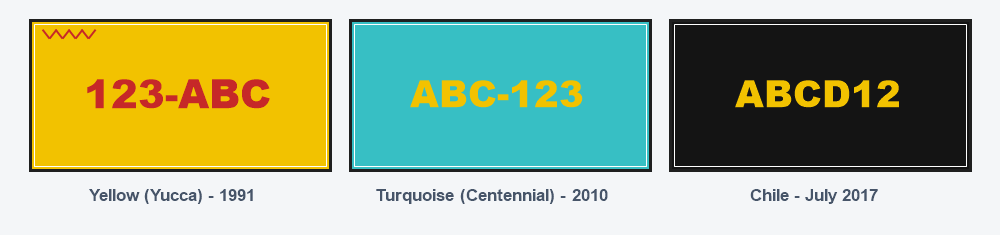
The yellow, turquoise and chile designs all issue with a standard registration at no added plate charge. The fee structure differs on specialty and cause plates. A driver picks one at the counter or during an online transaction, and the bill stays the same whichever one they choose. That makes the choice a matter of taste rather than budget. A specialty design leaves the standard group and adds a yearly amount, which is the point at which the plate begins to cost money of its own.
Sample and display plates
New Mexico sells sample and “Fun” plates for $9.99 each, and every one carries the words NOT FOR REGISTRATION. The plate suits a wall, a desk or a gift rather than a vehicle, so it never reaches the registration record. A driver who wants the design without a yearly charge has a cheap route to it. Collectors buy them alongside older issues rather than fitting them to a car.
Replacement charges
A lost or damaged plate carries a replacement charge rather than a renewal. The chile design runs at $17 in person or $7.25 online, which makes it the cheapest replacement in the catalogue. A standard plate that has bent, cracked or faded carries a charge of its own, and a personalized or specialty design follows the same route. Order the replacement through the division, fit the new plate, then renew the registration against it.
| Plate | Amount | When it applies |
|---|---|---|
| Standard design (yellow, turquoise or chile) | No added charge | At registration and at every renewal |
| Sample and fun plates | $9.99 each | Display only, marked not for registration |
| Chile plate replacement | $17 in person, $7.25 online | A lost or damaged chile plate |
| Replacement of a damaged standard plate | Replacement charge applies | A plate that fails the readability test |
Specialty and Prestige Charges
A specialty design adds a yearly amount that often funds a named cause, and a personalized plate adds its own charge for the characters. A driver who wants specific text works through the vanity plate rules. Both sit on top of the standard registration rather than in place of it. The table below lists the published amounts for the designs that carry a fee.
How a specialty fee works
A specialty design carries an initial figure and a renewal figure, and the two often differ. A driver should read both columns before choosing, since the renewal amount returns every year rather than once. Several designs repeat the full amount at renewal, which makes them the most expensive options over a decade. A few send part of the charge to a fund named in the statute, which is the reason the plate exists.
What a prestige plate adds
A personalized plate adds an annual figure for the characters, collected with the registration renewal. The design underneath stays one of the three standard colors, so the plate charge comes from the text rather than from the artwork. Confirm the current amount on form MVD10199 before you submit it, since the division sets the figure. A driver who keeps the plate for several years pays the charge each time the registration renews.
Where the money goes
Where a design supports a cause, the statute divides the amount between the department and the receiving fund. The department keeps a share to cover the cost of making and issuing the plate, and the rest reaches the program named in the law. The division publishes the split alongside each design, which makes the destination of the money easy to check. That structure separates a cause plate from an ordinary one, and it explains why the fee repeats each year.
| Design | Initial | Renewal |
|---|---|---|
| Smokey Bear | $50 | $40 |
| Amateur radio operator | $5 | $5 |
| Share with Wildlife | $27 | $12 |
| Bass Fishing | $27 | $10 |
| Pollinator Protection | $27 | $15 |
| Acequia and Community Ditch | $30 | $30 |
| Autism Awareness | $35 | $35 |
| FFA | $35 | $25 |
| Pet Care (Spay-Neuter) | $37 | $37 |
| Breast Cancer Awareness | $37 | $37 |
| Route 66 | $37 | $37 |
| Cumbres and Toltec Railway | $40 | $40 |
What Makes a Bill Higher
Four details decide where a total lands, and each one is predictable before you reach the counter. Knowing them lets you compare two vehicles on running cost rather than on sticker price alone.
Vehicle weight
A heavier vehicle pays a higher registration fee every year, and the gap repeats at each renewal. A truck used for light work may sit in a heavier class than a passenger car of similar size, which changes the annual figure. Check the weight class before you buy rather than after the first bill arrives. A model sold in two trim levels can sit in two different classes, which makes the specification worth reading.
The county of registration
The county adds its own amount, so the same vehicle can cost different sums in different parts of the state. A move across a county line changes the figure at the next renewal. Keeping the address on the record current avoids paying the wrong county’s rate. The county decides whether an emissions program applies, which adds a step rather than an amount.
A specialty or personalized plate
A specialty design adds a yearly charge, and several repeat the full amount at each renewal rather than dropping after the first year. A personalized plate adds its own annual figure for the characters. A driver choosing a design for the artwork should read the renewal column and the initial one. Over five years the renewal figure matters more than the first payment.
A late renewal
A late charge is added once the expiry date passes, and the amount can climb the longer the registration sits out of date. Renewing as soon as you notice keeps the figure at its lowest. A driver who cannot renew straight away should keep the vehicle off the road rather than risk a separate penalty on top. The late charge arrives alongside the ordinary amount rather than in place of it.
What Can Lower a Bill
Two choices keep the total at the bottom of the range, and both are free to make. A driver who plans the year ahead rarely pays more than the base amount.
Designs that carry no fee
The three standard designs cost nothing beyond the registration, so a driver who wants the lowest bill picks one of those. Several service designs waive their charge, including the Medal of Honor, Prisoner of War, Purple Heart and active National Guard plates. Those designs need proof of entitlement, and the state waives the registration charge on most of them as well. A qualifying driver can hold a plate for less than a standard one.
Renewing on time
Renewing before the expiry date removes the late charge and the separate penalty that follows a stop on an expired plate. Set a reminder for the month before, since a renewal notice can go astray after a move. Keep insurance active across the renewal date, since a gap can add a charge of its own. Handling those three details takes minutes and saves real money.
How to Check Your Own Amount
The state publishes the fee schedule, and your own figure follows from three facts you already know: the vehicle, the county and the design. The steps below take you to a number before you pay.
Find the vehicle’s weight class
The registration fee follows gross vehicle weight, and the class appears on the title, the registration card and the manufacturer’s specification. Note the figure rather than an estimate, since the boundary between two classes can sit close to a given model’s weight. A dealer can confirm the class for a vehicle you are considering. A model sold in two trim levels can sit in two different classes.
Note the county on the record
The county where the vehicle is kept adds its own amount. Confirm that the address on the registration matches where you actually keep the vehicle, since a stale address means the wrong county’s rate. Update the record through the division if you have moved. The county decides whether an emissions program applies.
Decide on the plate design
A standard design adds nothing. A specialty design adds an amount that repeats at each renewal. A personalized plate adds its own yearly figure for the characters. Read both columns before you choose the design, since the renewal amount returns every year. A standard design leaves the total at the registration figure alone.
Check the title charge if the vehicle is new to you
The title charge arrives at the first registration rather than at each renewal. A vehicle from another state adds a title transfer and an identification number check to the same visit. A dealer purchase usually folds those amounts into the sale paperwork. The charge appears once rather than at every renewal.
Add it up and confirm against the schedule
Combine the registration fee, the county amount, any title charge and any plate charge, then compare the total against the state’s published schedule. A figure that looks high usually traces to the weight class or the county. Ask before you pay rather than after, since a question is easier to answer as the record is open.
Official fee schedule
Registration amounts by weight and county, plus every form: mvd.newmexico.gov/vehicles/vehicle-registration/ and mvd.newmexico.gov/forms/most-popular-forms/
Comparing Two Vehicles on Running Cost
A buyer who looks at the sticker price alone misses the amount that repeats every year. The registration fee, the county amount and any plate charge all return at each renewal, so a cheap vehicle in a heavy class can cost more over five years than a dearer one in a light class. Add the insurance figure and the fuel figure to the same sum, and the annual cost tells a different story from the purchase price. A driver who plans to keep a vehicle for several years should run that sum before signing rather than after the first renewal notice arrives.
Frequently Asked Questions
These are the questions drivers ask most often about plate and registration costs in New Mexico. Each answer stays short and points to the official source where the state publishes the current fee. Where a detail affects money, confirm the figure before you pay.
How much do license plates cost in New Mexico?
The three standard designs carry no added charge beyond the registration fee. A specialty design adds an amount on top, from $5 for an amateur radio plate to $50 for the Smokey Bear plate. A personalized plate adds its own yearly figure.
How is the New Mexico registration fee calculated?
The fee follows the weight of the vehicle and the county where it is kept. A heavy truck pays more than a light car, and two identical vehicles in different counties can land on different totals. The title charge applies at the first registration rather than at each renewal.
Which New Mexico plates cost nothing extra?
The yellow, turquoise and chile designs all cost the same as a standard registration, which means no added plate charge. Several service designs waive their fee, including the Medal of Honor, Prisoner of War, Purple Heart and active National Guard plates.
How much is a replacement plate?
A chile plate replacement runs at $17 in person or $7.25 online. A standard plate that has bent, cracked or faded carries a replacement charge of its own. Order the replacement through MVD, then renew the registration against the new plate.
What happens to the cost if I renew late?
A late charge is added once the expiry date passes, and the amount can climb the longer the registration sits out of date. Driving on an expired registration brings a separate penalty. Renew as soon as you notice to keep the total at its lowest.